
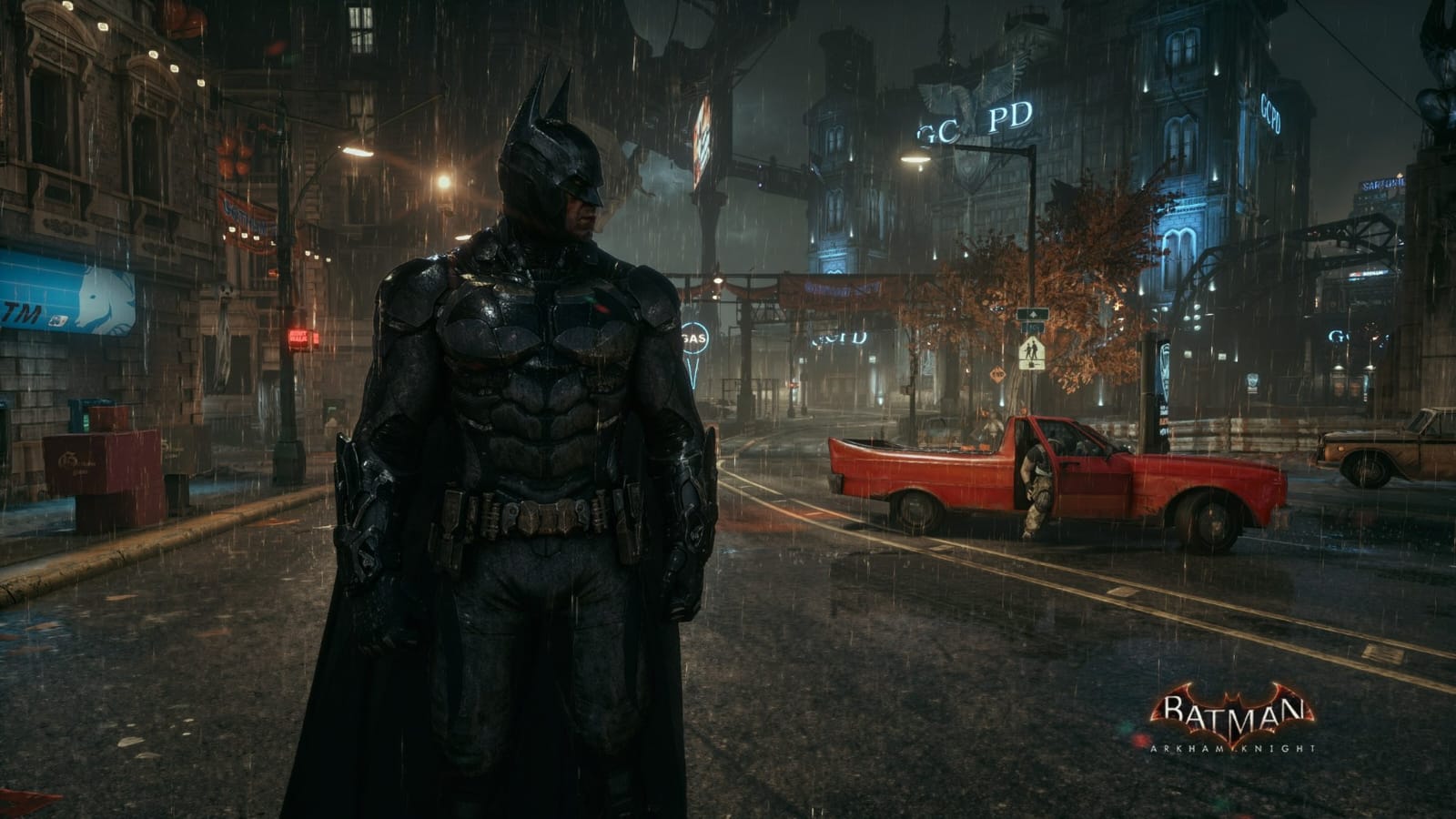
NVIDIA’s DLSS 5 isn’t even officially available to gamers yet, but the modding community is already finding increasingly ambitious ways to bring its new Neural Rendering technology to games that were never designed to support DLSS at all.
A new community-developed project called DLSS5-Feeder can provide the information required to run DLSS 5 Neural Rendering in certain older games, including titles using DirectX 11 that don’t have native DLSS integration.
And the project is becoming considerably more ambitious.
According to its developer, DLSS5-Feeder is designed to work with D3D11, D3D12, 32-bit games and even DirectX 9, while its latest versions have also introduced Vulkan support.
In other words, a technology NVIDIA designed for the latest generation of PC graphics could potentially be injected into games released long before DLSS even existed.
DLSS5-Feeder Can Bring DLSS 5 to Games Without Native DLSS
Normally, this shouldn’t be possible.
NVIDIA’s DLSS technologies require information from the game engine to operate correctly.
The new DLSS 5 Neural Rendering system similarly depends on specific inputs.
But DLSS5-Feeder attempts to get around that limitation.
The project’s documentation explains that DLSS 5’s Neural Rendering add-on normally hooks into a game’s existing DLSS calls. If a game doesn’t support DLSS, those calls never happen, meaning Neural Rendering has nothing to attach itself to.
DLSS5-Feeder essentially creates those calls itself.
The project uses information available through ReShade, including the current frame, depth buffer and estimated motion vectors, to construct what its developer describes as a synthetic DLSS/DLAA “contract.”
It then performs a genuine DLSS evaluation and allows the DLSS 5 Neural Rendering component to hook into that process.
The resulting neural-rendered image is then returned to the game’s frame.
It’s an unofficial workaround, but potentially an extremely powerful one.
ReShade Is the Key to Making It Work
ReShade plays an important role in the process.
The popular post-processing injector has been used by PC gamers and modders for years to modify the visual presentation of games.
DLSS5-Feeder takes advantage of the information ReShade can access to provide DLSS with data the original game was never programmed to send.
According to the project’s current documentation, the pipeline effectively takes the game frame and combines it with depth and motion-vector information before feeding those inputs into DLSS/DLAA and DLSS 5 Neural Rendering.
That opens an intriguing possibility.
Developers don’t necessarily have to update an old game themselves for enthusiasts to experiment with DLSS 5 Neural Rendering.
The community can attempt to build the missing bridge.
It Doesn’t Stop at DirectX 11
The original post circulating on social media specifically highlights older DirectX 11 games.
But the project’s current scope has already gone beyond that.
Its documentation claims support for:
- DirectX 11
- DirectX 12
- 32-bit games
- DirectX 9
- Vulkan
The Vulkan support is particularly recent.
DLSS5-Feeder v0.5.0 was released on August 30 with Vulkan support, followed only hours later by version 0.5.1, which added a Vulkan interoperability layer and settings accessible through the ReShade overlay.
Development is therefore moving extremely quickly.
NVIDIA Never Designed DLSS 5 as a Simple Upscaler
What makes these experiments particularly interesting is that DLSS 5 represents a major change from what many players traditionally associate with DLSS.
DLSS originally became famous primarily for rendering games at lower internal resolutions and using machine learning to reconstruct higher-resolution images.
DLSS 5’s headline feature is different.
NVIDIA describes it as a real-time neural rendering model capable of enhancing lighting and materials to produce more photorealistic imagery.
According to NVIDIA, the system analyzes elements including characters, hair, fabric, translucent skin and environmental lighting.
It then uses that information to generate more sophisticated visual characteristics while remaining anchored to the game’s original 3D content.
NVIDIA has described DLSS 5 as its biggest graphics breakthrough since real-time ray tracing.
DLSS 5 Has Already Escaped Into Other Games
DLSS5-Feeder isn’t happening in isolation.
The PC modding community has been experimenting heavily with DLSS 5 following the appearance of an early Neural Rendering implementation in an early-access build of NBA 2K27.
Modders extracted the relevant Neural Rendering component and began experimenting with it in games that weren’t intended to support the technology yet.
One of the first major examples was Remedy’s Control.
The experiments quickly expanded to other games, including Skyrim, Cyberpunk 2077 and GTA V.
And things have moved remarkably quickly.
Modders Even Got DLSS 5 Running on RTX 40 GPUs
There’s another unexpected development.
The leaked implementation initially appeared restricted to NVIDIA’s RTX 50-series Blackwell GPUs.
That restriction didn’t last long.
Modders discovered that incompatible CUDA instructions could be patched, allowing the technology to operate on previous-generation Ada Lovelace hardware.
Tom’s Hardware independently verified DLSS 5 running on RTX 40-series hardware, including an RTX 4080, through the community workaround.
That doesn’t mean NVIDIA officially supports DLSS 5 on RTX 40 cards.
It doesn’t.
But it demonstrates how quickly enthusiasts are dismantling the technical restrictions surrounding the early implementation.
The Results Can Be Impressive — and Very Weird
There’s a major caveat.
DLSS 5 isn’t simply making old graphics sharper.
Because Neural Rendering can reinterpret materials, lighting and character details, the resulting image can sometimes look dramatically different from the original game.
Experiments have already produced unusual character faces and altered visual characteristics.
PC Gamer highlighted the phenomenon after modders began applying the leaked technology to games never designed around it, noting how aggressive settings could significantly transform familiar characters.
That’s particularly important because these unofficial implementations lack something NVIDIA considers essential to DLSS 5:
developer control.
NVIDIA says official implementations provide developers with controls for intensity, color grading and masking, allowing artists to determine where Neural Rendering should and shouldn’t modify the image.
Forcing the technology into an old game obviously doesn’t provide the same carefully designed integration.
Performance Is Another Major Problem
There’s also a substantial performance cost.
Early unofficial testing of the leaked Neural Rendering implementation in Control showed significant FPS losses.
One test cited by TechRadar used an RTX 5070 Ti running the game at 4K with high ray tracing and DLSS Quality.
Performance reportedly dropped from around 71 FPS to 35 FPS when Neural Rendering was enabled.
That’s nearly half the original performance.
But those numbers shouldn’t be interpreted as representative of final DLSS 5 performance.
The implementation being tested is early code extracted from another game, unofficially injected into software it wasn’t designed for and running without the optimization developers would normally provide.
NVIDIA’s final implementation could behave very differently.
Old Games Could Become the Most Interesting DLSS 5 Experiments
The most exciting possibility may actually have little to do with upcoming AAA games.
Imagine applying neural rendering to a game from 2010, 2012 or 2015.
Its geometry, animations and original assets remain intact, but Neural Rendering interprets its lighting, skin, clothing and materials using a significantly more sophisticated AI model.
We’ve already started seeing examples of exactly that.
An experiment involving FIFA 16, released more than a decade ago, recently attracted attention because DLSS 5 dramatically changed the presentation of players including Cristiano Ronaldo and Andrés Iniesta.
The results aren’t perfect.
But they demonstrate something potentially transformative for PC modding.
Instead of waiting years for an official remaster, enthusiasts could theoretically use neural rendering to give much older games a dramatically different visual presentation.
This Isn’t Official NVIDIA Support
There is one important distinction players need to understand.
DLSS5-Feeder is not an NVIDIA product.
It is an open-source community project.
NVIDIA isn’t officially adding DLSS 5 to every DirectX 11 or DirectX 9 game.
And a game running through DLSS5-Feeder shouldn’t be described as officially supporting DLSS 5.
This is an unofficial method developed by enthusiasts to provide the information necessary for Neural Rendering to operate where native integration doesn’t exist.
Official DLSS 5 support remains controlled by NVIDIA and participating game developers.
DLSS 5 Hasn’t Even Officially Launched Yet
Perhaps the craziest part of the story is the timing.
NVIDIA officially announced DLSS 5 on March 16, 2026, describing it as a major evolution in neural graphics.
The official release isn’t expected until this fall.
NVIDIA has already announced support from major publishers and developers, with games including Resident Evil Requiem, Assassin’s Creed Shadows, Hogwarts Legacy, Starfield, The Elder Scrolls IV: Oblivion Remastered and others expected to support the technology.
Yet before the official consumer rollout has even begun, modders are already experimenting with DLSS 5 in games from entirely different generations.
If projects such as DLSS5-Feeder continue improving, DLSS 5 may ultimately become interesting for reasons NVIDIA never originally intended.
Not simply because of what it can do for the newest games.
But because of what the PC community might make it do to thousands of older ones.
Frequently Asked Questions
Can DLSS 5 work in games without native DLSS support?
Unofficially, yes. The community-developed DLSS5-Feeder project creates the DLSS calls and supplies information required for Neural Rendering through ReShade, allowing experimentation in games without native DLSS integration.
Does DLSS5-Feeder work with DirectX 11 games?
Yes. DirectX 11 is supported, and the project’s current documentation also lists D3D12, 32-bit games, DirectX 9 and Vulkan.
Is DLSS5-Feeder made by NVIDIA?
No. It is an unofficial open-source community project and isn’t official NVIDIA software.
Has DLSS 5 officially launched?
Not yet. NVIDIA announced DLSS 5 in March 2026 and says the technology will officially arrive this fall.
Can DLSS 5 work on RTX 40-series GPUs?
NVIDIA’s leaked early implementation wasn’t officially intended for RTX 40-series hardware, but modders have managed to patch it to run on cards including the RTX 4080. This is not official NVIDIA support.
Does DLSS 5 improve performance?
DLSS 5’s Neural Rendering is primarily focused on visual fidelity rather than simply increasing frame rates. Current unofficial implementations can actually impose a substantial performance cost, although they don’t represent the optimized final release.