
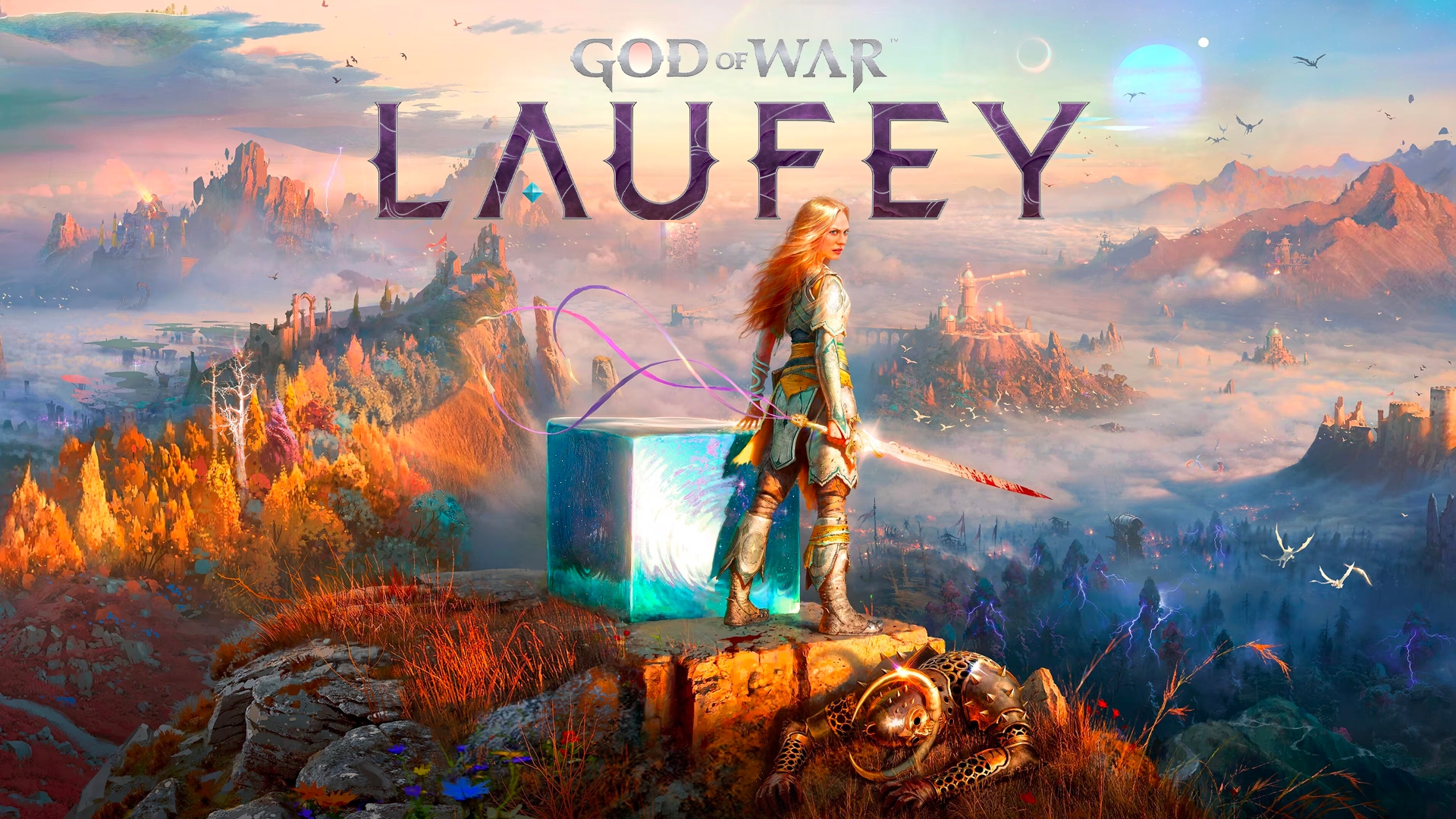
The future of God of War may be far bigger than anyone imagined.

After years of speculation about where Santa Monica Studio could take the franchise after Ragnarök, players finally received a major clue during the reveal of God of War: Laufey. While many expected another chapter rooted entirely in Norse mythology, new details suggest the next adventure could become the most ambitious entry in the series’ history.
The biggest surprise isn’t the return of familiar characters. It’s the world itself.
According to information revealed following the game’s announcement, God of War: Laufey introduces players to a mysterious realm known as The Everywhen, a place where gods, creatures, and legends from multiple mythologies coexist. If that concept sounds massive, that’s because it is.
For the first time in franchise history, God of War appears ready to move beyond a single mythology and embrace a much larger universe.
And fans are already trying to imagine what that could mean.
A New World Beyond the Nine Realms
Since the original trilogy, God of War has traditionally focused on one mythology at a time.
The Greek saga centered on Olympus and its gods. The Norse era introduced the Nine Realms, Odin, Thor, Freya, and countless legendary figures from Scandinavian folklore.
God of War: Laufey changes that formula.
The Everywhen is described as a realm that exists outside conventional mythology. Rather than belonging to a single culture, it serves as a crossroads where different pantheons can interact.
That concept alone dramatically expands the possibilities for the franchise.
Instead of simply moving from Norse mythology to another setting, Santa Monica Studio may be building a world where multiple mythological traditions collide.
It’s a creative shift that could redefine what a God of War game looks like moving forward.
Egyptian Mythology Makes Its Presence Felt
One of the most talked-about discoveries from the reveal involves the appearance of Sekhmet.
For longtime fans, this is a huge moment.
Egyptian mythology has been connected to God of War rumors for years. Even before the 2018 reboot, concept art and developer interviews revealed that ancient Egypt had been considered as a possible destination for Kratos.
Now, it appears those ideas may finally be becoming reality.
Sekhmet is one of the most powerful deities in Egyptian mythology. Associated with war, destruction, healing, and protection, she has long been considered one of the most feared figures within the Egyptian pantheon.
Her inclusion immediately raises questions.
If Sekhmet is here, who else might be coming?
Could future chapters introduce Anubis, Ra, Osiris, Isis, or Set?
Nothing has been confirmed yet, but the door has clearly been opened.

An Unexpected Mythology Enters the Spotlight
While many fans anticipated Egyptian influences, few expected to see a figure connected to Mongolian and Tibetan traditions.
That’s exactly why the appearance of Begtse generated so much discussion.
Known as a fierce warrior deity, Begtse occupies a unique place in Asian spiritual traditions and represents a mythology rarely explored in major video games.
His presence suggests Santa Monica Studio isn’t simply choosing the most popular mythologies available.
Instead, the developers appear interested in exploring lesser-known legends alongside more familiar gods.
That decision could help give God of War: Laufey a unique identity while introducing players to stories they may never have encountered before.
Laufey’s Journey Could Change Everything
The decision to center the story around Laufey may be more important than many players initially realized.
Unlike Kratos, whose personal history is deeply tied to Greek and Norse mythology, Laufey offers a fresh perspective.
She can act as a bridge between worlds.
Through her eyes, players may discover entirely new civilizations, mythological conflicts, and divine powers that exist far beyond the Nine Realms.
This narrative freedom allows Santa Monica Studio to expand the universe without being constrained by previous storylines.
It’s a clever way to evolve the franchise while still maintaining connections to established characters and events.
The Community Is Already Building Theories
As expected, fans wasted no time analyzing every frame of the reveal.
Social media platforms quickly filled with discussions about hidden symbols, architectural designs, and visual references that could hint at future mythologies.
Some players believe Greek gods may eventually return.
Others think Egyptian mythology will become the primary focus of the next major saga.
A growing number of fans are even speculating about potential appearances from Japanese, Celtic, Hindu, Chinese, or Aztec traditions.
At this stage, most of these theories remain speculative.
But that’s part of what makes the reveal so fascinating.
For the first time in years, the future of God of War feels completely unpredictable.
A Bigger Universe Than Ever Before
Beyond the characters themselves, the reveal suggests a significant expansion of the franchise’s overall scope.
Previous games largely focused on conflicts within a single mythology.
The Everywhen introduces the possibility of something much larger.
Imagine rival pantheons competing for power.
Imagine gods from entirely different cultures meeting for the first time.
Imagine mythological wars that span multiple worlds rather than a single realm.
These are the kinds of possibilities now being discussed throughout the gaming community.
And if Santa Monica Studio can successfully execute that vision, the franchise could enter an entirely new era.

Why This Could Be the Most Important God of War Yet
Every major God of War release has marked a turning point for the series.
The original game introduced Kratos and changed action games forever.
God of War (2018) reinvented the franchise for a new generation.
Ragnarök expanded that vision on an even larger scale.
Now, God of War: Laufey may be preparing to do something equally significant.
By bringing together multiple mythologies, introducing new gods, and expanding the universe beyond anything previously seen, the game has the potential to reshape the future of the franchise.
The journey is only beginning.
But one thing already seems clear.
God of War is no longer limited to a single mythology.
And that may be the biggest revelation of all.