
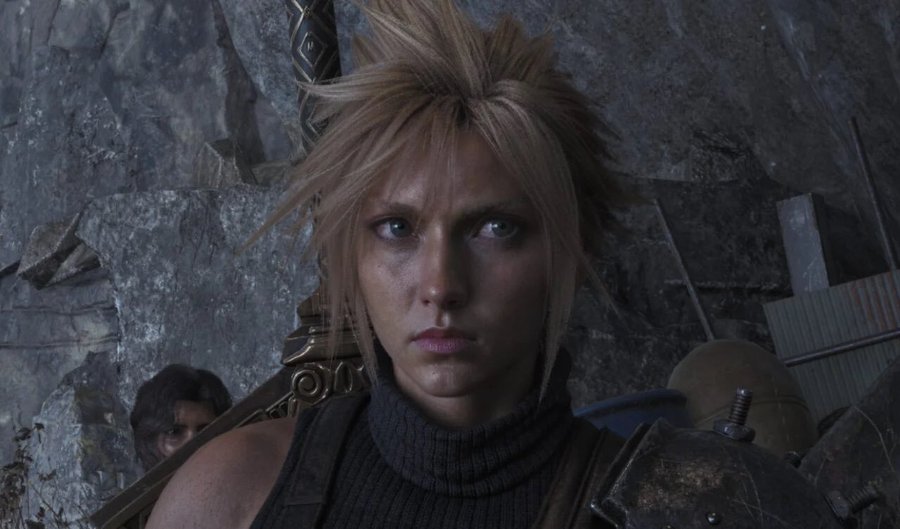
NVIDIA’s DLSS technology has spent years becoming one of the most important features in modern PC gaming, but its next major evolution is proving considerably more controversial.
DLSS 5 is facing growing criticism from gamers over concerns that its new Neural Rendering technology doesn’t simply improve graphics, but actively changes them.
Criticism initially erupted when NVIDIA officially unveiled DLSS 5 earlier this year, with players questioning dramatic changes to character faces, materials and lighting shown in the company’s own comparisons.
Now the debate has exploded again.
An experimental DLSS 5 Neural Rendering runtime recently found its way into the modding community, allowing enthusiasts to test the technology in games including Control, GTA V, Cyberpunk 2077, Final Fantasy VII Rebirth and others.
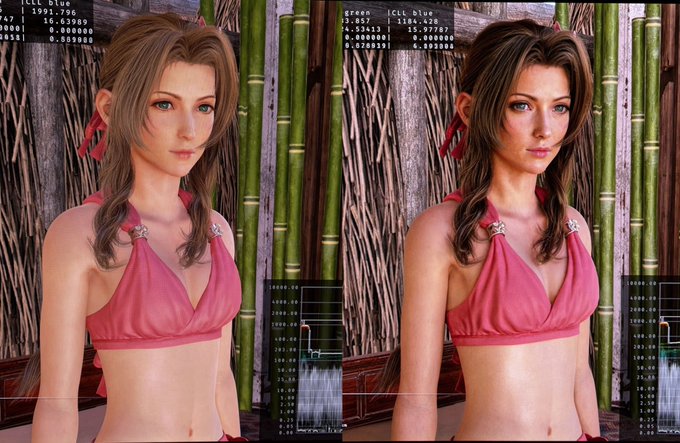
The results can sometimes be impressive.
But they’ve also demonstrated exactly what critics were worried about.
Characters can look like different people. Lighting can dramatically change. Materials can be reinterpreted. Performance can collapse.
And some players believe NVIDIA is crossing the line between enhancing a game’s graphics and replacing the work its artists actually created.
The Biggest DLSS 5 Criticism: “AI Slop”
The phrase repeatedly associated with DLSS 5 since its reveal has been blunt:
“AI slop.”
The criticism stems from how DLSS 5 differs from the technologies gamers traditionally associate with the DLSS name.
DLSS Super Resolution reconstructs a higher-resolution image from a lower-resolution render.
Frame Generation generates intermediate frames.
Ray Reconstruction uses AI to reconstruct ray-traced effects.
DLSS 5 Neural Rendering goes further.
Instead of merely reconstructing information, the model can reinterpret elements of the image to produce more photorealistic materials and lighting.
And that distinction has proven extremely controversial.
Following NVIDIA’s original presentation, some gamers compared the results to smartphone beauty filters and AI-generated imagery rather than traditional graphics improvements.

Character Faces Are at the Center of the Controversy
Human faces have become perhaps the best example of the problem.
When DLSS 5 Neural Rendering is applied aggressively, it can introduce details that weren’t necessarily present in the original image.
That can include changes to:
- Skin
- Facial structure
- Makeup
- Hair
- Shadows
- Material details
- Lighting
During recent experimental testing in Control, for example, protagonist Jesse Faden’s appearance visibly changes depending on the Neural Rendering preset being used.
The Verge observed that enabling one setting made Jesse appear paler while introducing more visible facial lines and what looked like additional makeup beneath her eyes.
That’s fundamentally different from making her original face sharper.
The AI is interpreting what her face should look like.
And that’s exactly what makes some players uncomfortable.
GTA V Demonstrates How Extreme It Can Become
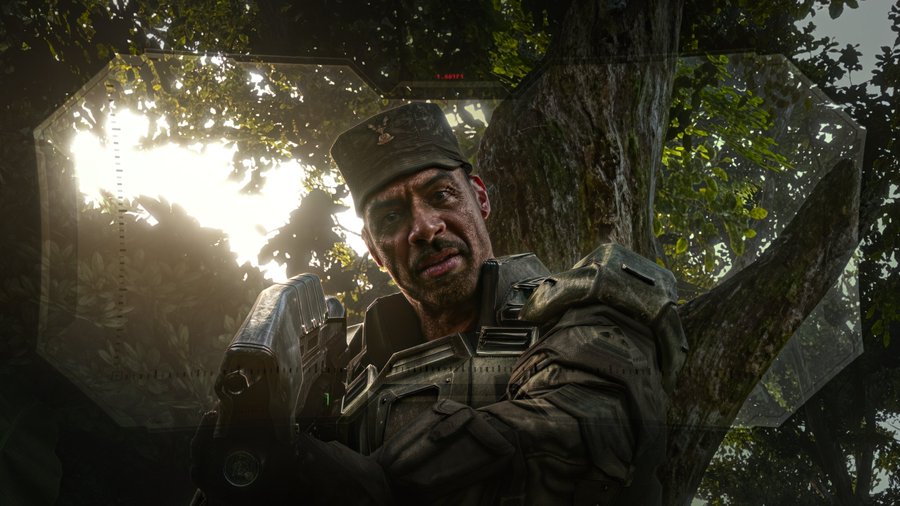
Recent GTA V experiments have made the controversy even more visible.
Modders have successfully injected the experimental Neural Rendering runtime into Rockstar’s game, producing dramatically different appearances for characters.
The results quickly generated jokes online about DLSS 5 “yassifying” characters.
GamesRadar highlighted one experiment involving Michael De Santa, describing the current implementation as capable of creating bizarre and unsettling visual changes.
The technology can also alter more than faces.
Tests have shown noticeable changes to textures, shadows and overall lighting.
In GTA: San Andreas, for example, The Verge reported that DLSS 5 could change the appearance of CJ’s face while simultaneously altering textures, shadows and even shifting the scene’s overall lighting from a warmer presentation toward a cooler one depending on the settings.
That raises an important question:
At what point is the AI no longer enhancing the original game?
Critics Say DLSS 5 Can Damage Artistic Intent
This is arguably the most important criticism surrounding DLSS 5.
Every game has an art direction.
Artists deliberately choose lighting.
They design characters.
They decide how skin should look.
They create materials.
They select colors.
They determine how cinematic a scene should appear.
If an AI model begins reinterpreting those decisions in real time, some players argue that the final image may no longer accurately represent what the artists created.
That criticism became widespread immediately after NVIDIA unveiled DLSS 5.
The reaction was strong enough that several outlets questioned whether the technology was undermining the artistic intent of developers rather than simply improving image quality.
It’s an especially sensitive issue because modern games increasingly rely on carefully constructed cinematic performances.
A character’s face isn’t merely a texture.
It represents concept art, modeling, scanning, motion capture, animation, lighting and potentially an actor’s real appearance.
Changing that face through AI can therefore create consequences beyond ordinary graphics processing.
Some Players Compare It to TV Motion Smoothing
There’s an interesting parallel.
Modern televisions frequently include motion interpolation designed to make video appear smoother.
Technically, it can produce more motion clarity.
But filmmakers often dislike it because it changes how their movies were intended to look.
DLSS 5 is creating a similar debate for video games.
The question isn’t necessarily:
“Does the image contain more detail?”
Instead, it’s:
“Is that detail supposed to be there?”
An AI model might create technically convincing skin, lighting or fabric.
But if those elements differ from what the game’s artists designed, greater realism doesn’t automatically mean greater accuracy.
The Performance Cost Is Also Raising Eyebrows
Visual changes aren’t the only concern.
The experimental implementation currently carries an enormous performance cost.
The Verge highlighted tests where DLSS 5 dramatically reduced frame rates.
One Final Fantasy VII Rebirth tester reported that the implementation effectively halved performance while switching between presets consumed large amounts of VRAM.
Another GTA V experiment showed performance falling from approximately 90 FPS to 29 FPS while Neural Rendering settings were being adjusted.
That’s a massive reduction.
For a technology carrying the DLSS branding, that can initially sound strange because gamers generally associate DLSS with improving performance.
But Neural Rendering isn’t simply another Super Resolution mode.
It’s performing significantly more sophisticated AI processing on the rendered image.
The Current Modded Results Are NOT Final DLSS 5
This distinction is extremely important.
The viral comparisons circulating online right now shouldn’t be treated as representative of how every officially supported DLSS 5 game will look.
Modders obtained access to an early Neural Rendering runtime associated with NBA 2K27 and began injecting it into completely different games.
Those games weren’t necessarily designed for DLSS 5.
Their developers didn’t configure the Neural Rendering model specifically for their characters.
Artists didn’t create masks determining where the effect should operate.
And the implementations haven’t received the optimization an officially supported game would.
The current experiments are essentially demonstrating:
“What happens if we force this technology into games ourselves?”
Not:
“This is exactly what final DLSS 5 will look like.”
That distinction matters enormously when judging both image quality and performance.
NVIDIA Is Giving Developers Control Over the AI
NVIDIA is well aware of the criticism.
At SIGGRAPH 2026, the company demonstrated some of the tools developers will receive for controlling DLSS 5.
These include Structure Intensity and Tone Intensity controls that affect how aggressively Neural Rendering modifies the resulting image.
More importantly, developers can use masking to control where the technology operates.
That means a developer could theoretically allow DLSS 5 to improve certain environmental materials while preventing it from dramatically altering an important character’s face.
Different AI models can also be used depending on what developers want from the scene.
This is NVIDIA’s primary defense against accusations that DLSS 5 simply throws an uncontrollable AI filter over a game.
The developer still has control.
Jensen Huang Personally Responded to the Backlash
The criticism became significant enough that NVIDIA CEO Jensen Huang directly addressed it.
After the initial DLSS 5 reveal generated widespread backlash, Huang argued that the technology shouldn’t be confused with uncontrolled generative AI.
He emphasized that developers determine how DLSS 5 is implemented and can choose whether or not to use it.
Huang later acknowledged the concerns more sympathetically, saying he understood why people were worried and adding that he personally doesn’t like “AI slop” either.
NVIDIA’s argument is essentially that Neural Rendering should be considered another tool available to artists rather than something intended to replace them.
Whether gamers accept that distinction will depend heavily on how developers actually use it.
The Latest Leak May Actually Be Making DLSS 5 Look Worse
There’s an irony to the current situation.
The experimental runtime has allowed players to see DLSS 5 working across far more games than NVIDIA intended before its official rollout.
But those demonstrations also remove one of NVIDIA’s strongest arguments:
developer control.
When a modder forces Neural Rendering into GTA V, Rockstar isn’t deciding how Michael’s face should be processed.
When it’s injected into Control, Remedy isn’t necessarily defining the artistic boundaries.
When it’s forced into an older game, the original developers may have designed the artwork years before DLSS 5 existed.
So the viral comparisons can demonstrate the technology’s capabilities while simultaneously showing a worst-case scenario for artistic consistency.
That’s why some experiments look extraordinary while others look bizarre.
Not Everyone Thinks DLSS 5 Looks Bad
The reaction isn’t universally negative.
Some observers have been impressed by how much additional material detail the technology can produce, particularly considering it’s happening in real time.
Recent testing across more than a dozen games has demonstrated significant improvements to certain textures, lighting scenarios and older character models.
French technology publication Les Numériques, for example, examined the recent experiments and came away impressed by several of the results despite acknowledging the controversial nature of the technology.
That illustrates why DLSS 5 has become such an interesting debate.
The technology isn’t necessarily failing.
In some cases, it’s arguably working too well.
DLSS 5’s Biggest Problem May Be That It Can Invent Detail
Traditional graphics improvements are relatively easy for players to understand.
Higher-resolution texture?
Better.
Higher polygon count?
Better.
More accurate ray tracing?
Better.
DLSS 5 creates a much more complicated question.
If AI generates a more realistic face but that face is different from the character designed by the artist, is that actually better graphics?
If it creates more sophisticated fabric but changes the intended material, is that an improvement?
If it produces more realistic lighting but alters the atmosphere of the scene, which version is correct?
Those questions don’t have simple technical answers because they’re fundamentally artistic.
DLSS 5 Could Become Incredible — or Extremely Controversial
The technology hasn’t officially received its full consumer rollout yet, making definitive judgment premature.
Current modded experiments are unfinished and frequently being used in games that weren’t designed for Neural Rendering.
But the backlash shouldn’t simply be dismissed either.
The experiments demonstrate legitimate concerns about how aggressively AI can reinterpret a game’s visuals.
NVIDIA now faces an unusual challenge.
It doesn’t simply have to prove that DLSS 5 works.
It has to prove that developers can make it work without sacrificing the artwork players actually wanted to see.
And that may ultimately determine whether Neural Rendering becomes the next major leap in PC graphics or one of NVIDIA’s most controversial gaming technologies ever.
Frequently Asked Questions
Why are gamers criticizing DLSS 5?
The biggest criticism is that Neural Rendering can significantly reinterpret character faces, lighting and materials rather than simply improving the original pixels. Some players believe this can damage a game’s intended art direction.
Why is DLSS 5 being called “AI slop”?
The term became widespread following NVIDIA’s original demonstration because critics thought some results resembled generative-AI filters rather than faithful graphical enhancements.
Does DLSS 5 change character faces?
It can. Recent experimental implementations have demonstrated noticeable changes to faces depending on the Neural Rendering model, preset and intensity being used.
Does DLSS 5 reduce FPS?
Current experimental modded implementations can have a very large performance cost. However, those results shouldn’t be considered benchmarks for optimized official implementations.
Are the GTA V and Control DLSS 5 tests official?
No. These are community experiments using an early Neural Rendering runtime in games that weren’t officially implementing DLSS 5 in those demonstrations.
Can developers control how much DLSS 5 changes a game?
Yes. NVIDIA has demonstrated developer controls including Structure and Tone intensity as well as masking designed to determine where Neural Rendering is applied.
What has NVIDIA said about the criticism?
CEO Jensen Huang has defended DLSS 5 as a developer-controlled technology rather than uncontrolled “AI slop,” while also acknowledging gamers’ concerns about preserving artistic intent.